Tuesday, November 16, 2010

Duke Gardens: A Student's Eye View

Blooming Now at Sarah P. Duke Gardens

Photos and text by Lauren Sims

Duke Gardens Curators Jason Holmes and Mike Owens and horticulturist Tamara Kilbane all agree that the camellias are not to be missed right now at Duke Gardens. The “Maiden’s Blush” camellias that line the Perennial Allee are in full bloom. Their pale pink blossoms reach nearly 15 feet in height, and their spicy fragrance fills the air. It is a sight to behold!


In the next few days, you can also catch a glimpse of the ginkgo biloba in all its glory. Its leaves are a brilliant shade of yellow, which looks spectacular against a deep Carolina sky. But hurry on over to take your pictures—in just a matter of days the show will be over and it will drop all its leaves into a thick golden blanket on the grass.


Along with the ginkgo, you will want to wander around and take in the colors of the rest of the fall foliage, Jason says.

“We have a lot of the wonderful southern sugar maples, which are in full bright yellow-to-golden color right now," he says. "The sourwoods are a brilliant red, a lot of the red maples are really turning their fall colors, and the pin oaks are brilliant burgundy red right now.”


The Gardens also boasts a wide variety of grasses and evergreens, as well as a lovely collection of pansies, which lend some deeper shades to the color palette. And as the leaves fade and fall, the new berries on the winter hollies will stand out even more.


Come visit us and enjoy the colors, and the brisk fall weather for yourself.

Sarah P. Duke Gardens creates and nurtures an environment in the heart of Duke University for learning, inspiration and enjoyment through excellence in horticulture. The Gardens is at 420 Anderson St. in Durham.

Lauren Sims is a graduate student at Duke Divinity School and a work-study assistant at Duke Gardens.

Thursday, November 11, 2010

Duke Gardens craft sale preview

Our volunteer Garden Guild works tirelessly all year long making gift items for sale in the Terrace Shop and at our annual holiday craft sale. This year's sale is Saturday, from 10 a.m. to 4 p.m. in the Doris Duke Center. Admission is free and parking is free until 1 p.m. Groups in buses are welcome. All proceeds from the sale go directly to Duke Gardens.

We hope you'll come and take a look at the sweets, ornaments, stationery, knitted items and other treasures they've made. Here's a preview for you.

gourd birdhouses


gourd ornaments


origami gift boxes


origami gift boxes made from recycled Gardens publications


woven reed ornaments


"goldfish" soap


sweet treats


decorative vases


cubby clocks


photo or note holders


floral fabric brooches


And a few more surprises, like this kitty gourd
who'll have his colorful painted coat by Saturday

Hope to see you here!

Monday, November 8, 2010

Duke Gardens class: Planning Your Garden

Article & sample design by Jan Little

Your personal garden should be a dream come true. It should charm you and improve your everyday life.

But how do you get there?

For some people a garden just happens. They buy plants and put them in the ground. Some seasons, they may move the plants from space to space until they and the plants are happy. And that process itself may the dream come true, a place to putter with their hands in the dirt, getting to know each plant through the seasons.

For others, the blank areas outside their doorways are just too big and overwhelming. They can’t seem to get started. That is when a landscape plan can make a difference.

Designing a landscape follows a process. The steps are not completely linear. Sometimes a step will cause you to loop back and reconsider an earlier decision. But with some effort, you will be able to complete a design.

The first rule of designing a landscape is to release yourself from needing to know what the end result will look like. Almost all creative processes require you to delay seeking a solution. That delay gives you the time to develop a sophisticated understanding of the challenges, and to set aside your preconceived notions. It also makes the end result more satisfying.

You do know what is in your landscape and your view right now, and that is the place to begin. Make a list or a scaled drawing that shows everything about your house and landscape. Include window locations and heights, doorways, walkways, driveways, patios, decks, water sources, trees and fences. It is often convenient to use the land survey that you received when your house was purchased as your base plan. List and evaluate existing conditions. Which do you like and which would you prefer to screen?

Next, you will put together a wish list. Just what do you want in your garden? A vegetable garden, a perennial border, a swing set, an ornamental pool, a shade garden, cutting flowers, fruit trees, a play space, patio or deck? Do you prefer low maintenance? What are your plant preferences? Bright, colorful flowers? Soothing tones of green? Fragrance? Consider your time budget and your financial budget as two line items on your list.

Now take your wish list and begin considering sizes. Should you plan for a 20-by-20-foot vegetable garden, or only 5-by-10? The more detailed your wish lists, the closer you will be able to approximate the sizes of different garden elements. For patios or decks, list the furniture you would like and that will help you estimate size.

Once you have the basic sizes, you can begin to shape how the garden will look. Using tracing paper over your base plan, begin to place your requirements on the paper. Further develop your plan by using some geometric shapes. Maybe the built elements are rectangular and the plant beds curvilinear. What happens when you turn the rectangles on a 45 degree angle? Perhaps that is more interesting.

Working on paper and using tracing paper helps you consider varied solutions. Making mistakes on paper is much easier that making them in the landscape itself.

Have fun with it. And if you could use more guidance, consider signing up for our “Design Your Home Landscape” four-week course beginning Nov. 18 from 6 to 9 p.m.

For information about this and other classes, please see our full schedule online at gardens.duke.edu or call 668-5309. You can see our full Nov.+Dec. schedule in this post.

Sarah P. Duke Gardens creates and nurtures an environment in the heart of Duke University for learning, inspiration and enjoyment through excellence in horticulture. The Gardens is at 420 Anderson St.

Jan Little is a landscape architect and the Gardens’ director of education and public programs. She will teach “Design Your Home Landscape.”


This column first appeared in the Herald-Sun's Homes & Garden section on Nov. 6.

Friday, November 5, 2010

A Student's Walk Through Duke Gardens

Text & photos by Lauren Sims (D'12)

This afternoon I took a stroll through Duke Gardens. I walk through these gardens almost every morning on my way to class, but I only rarely get the chance to stop and enjoy their beauty. The weather might be cooling down, but even in November there is still plenty to see around here.

Here’s a little pictorial tour, just in case you think the season for gawking is over:

As I headed down the Perennial Allee, I couldn’t help but notice the walls of camellias that line the walkway on both sides.


In the midst of the pale camellia blooms, the shocking shades of the azalea and salvia really pop!


Several species in the Blomquist Garden of Native Plants are sporting these bright berries right now. I suspect the birds will know exactly where to come to get their fill this winter.


Many of the colorful flowers from earlier in the year have disappeared. In their wake the greenery becomes much more prominent. The structural lines and silhouettes that you can see in November give the Gardens a whole different atmosphere.


The Terrace Gardens are currently being replanted, getting ready for their winter incarnation. The geometry of the new plantings is what catches the eye right now, but it just a few short weeks it will be in full bloom.


That's not to say that there's nothing blooming in the Terraces. These dianthus stopped me in my tracks.

Be sure to look up while you’re wandering the Gardens, too! Despite our recent wind and rain, there are still plenty of vibrant reds and golds to be seen in the trees.

Thursday, November 4, 2010

Duke Gardens: November + December events

We’ve got lots of great activities in store for November and December. To register or for information, please e-mail or call 668-5309 for adult programs, or e-mail or call 668-1708 for children’s programs. For more information, please go to gardens.duke.edu.

Nov. 4 & 11, 7-9 p.m.
(2-class series)
PATIOS, WALKS and WALLS
*CLASS FULL* Building your own patio, walk or wall is less of a challenge if you begin with a great foundation of knowledge. Learn which paving type will suit your needs, review several installation methods, and then sketch out a plan to explore your choices first on paper. You can see examples of instructor and stone mason Cleve Wagstaff’s work all through the Duke campus. Read an interview with Wagstaff. $44; $40 Gardens Friends.

Nov. 4 & 18, 7-9 p.m. and Nov. 6 & 13, 8 a.m.-noon
(4-class series)
LEARNING TO SEE IN NATURE
Learn to more effectively observe nature, improve your ability to see the possibilities in a setting, and become a “photo-naturalist.” Photographer Melissa Southern will help you develop the ability to translate that vision into photographs that communicate to others and create something new and distinctive. $150; $120 Gardens Friends.


Nov. 5 & 19, 10 a.m.-noon
AUTUMN IN THE ARBORETUM
The Culberson Asiatic Arboretum holds many fascinating plants, displayed in beautiful and ever-changing combinations. Curator Paul Jones and horticulturist Michelle Stay Rawlins will guide you to little-known garden spaces and unique plants. Meet at the Doris Duke Center. $5; free for Gardens Friends. Please pre-register.


Nov. 6, 8-11 a.m.
BIRD WALKS
Enjoy an early morning stroll in the Gardens with fellow bird enthusiasts and Cynthia Fox, of Chapel Hill's Wild Bird Center. Cynthia will help you to spot, identify and learn more about the birds that call this region home, even temporarily. Don't miss this opportunity to experience that one remarkable bird sighting. Children are welcome if they are age 8 or older. Please bring binoculars. Free, but registration required.


Nov. 8, 7 p.m.
TRIANGLE ORCHID SOCIETY
The Triangle Orchid Society conducts its monthly meetings at the Doris Duke Center. This month’s topic: Orchids of the Dominican Republic. The public is invited. Free admission. For information: triangleorchidsociety.org.


Nov. 11 & Dec. 2, 11 a.m.-noon
WALK ON THE WILD SIDE
Explore wild North Carolina in these walks through our Blomquist Garden of Native Plants. Join curator Stefan Bloodworth on the first Thursday of every month to discover native flowers and design strategies, and discuss ecology and your role in protecting the health of our planet. (The November tour was postponed one week.) $5; free for Gardens Friends. Please pre-register to ensure a spot on this popular tour.


Nov. 12, 10:45 a.m.-noon
TRADITIONAL JAPANESE TEA GATHERING
*EVENT FULL* As a guest to Tea, you will experience the patterns and poetry of Chado, or the Japanese “way of tea,” while enjoying an enticing bowl of whisked tea and a seasonal treat. The practice of Tea is characterized by the phrase ichigo ichie, or “one moment – one meeting.” The small class group will meet at the Doris Duke Center to be escorted by instructor Nancy Hamilton to the Durham-Toyama Sister Cities Pavilion in Duke Gardens for this intimate gathering. This is the seasonal “Falling Leaves Tea.” $25; $20 Gardens Friends; $25 for one adult and one child age 6 or older.


Nov. 13, 10 a.m.-4 p.m.
GARDEN GUILD CRAFT SALE
Please stop by for some fun holiday shopping from the Gardens’ volunteer Garden Guild. Items for sale include knitted goods, stationery, ornaments, jewelry and other nature-focused gifts. Free admission. All proceeds support Sarah P. Duke Gardens.

Nov. 13, 10-11 a.m.
NATURE STORY TIME
Gather for nature stories and a take-home creative project with your 3- to 8-year-old child. Adults must accompany their children. Please make other arrangements for younger siblings. $3 per child. Registration required.

Nov. 18, Dec. 2, 9 & 16, 6-9 p.m.
(4-class series)
DESIGN YOUR HOME LANDSCAPE I
A well designed landscape creates a garden that is both enjoyable and maintainable. Jan Little, the Gardens’ director of education and public programs, will teach you the steps to complete a landscape design for your home, from identifying the existing conditions through generating potential ideas and completing the bed outlines. $110; $90 Gardens Friends.

Nov. 20 & 21, 8 a.m.-4 p.m.
(2-class series)
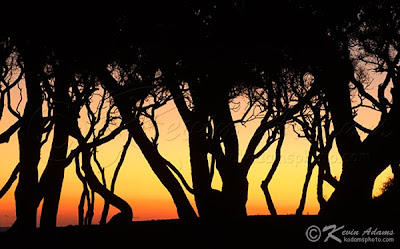
SILHOUETTE
In this spare season, the beauty of line and edge is revealed. Nature photographer Kevin Adams will help you capture the natural silhouettes of bare limbs, seed pods, and water edges. Class includes field work and classroom review. Please see Kevin’s work at kadamsphoto.com. $180; $150 Gardens Friends. 668-5309.

Nov. 20, 11 a.m.-noon
ARTS IN THE GARDEN: WILLA BRIGHAM
A storyteller, poet, recording artist and host of the regional Emmy Award-winning morning television show "Smart Start Kids" on WRAL and public television, Brigham aims to empower children and adults alike to believe in themselves. "Imagination is a building block for success," she says. "Storytelling is a wonderful vehicle to ignite a child's imagination." See a sample of Brigham's television show at WRAL. See some short "Making Stories in Duke Gardens" videos. The show will be inside the Doris Duke Center. $10; $6 for children. 684-4444; tickets.duke.edu.

Nov. 21, 2-4 p.m.
TREES IN THE URBAN LANDSCAPE
Let master gardeners Gene Carlone and Leanna Murphy Dono help you transform your landscape with trees in this presentation, part of a series co-presented with the Durham County Cooperative Extension Service. Learn a palette of plants and proper planting and mulching techniques, and enjoy your trees more. Free but registration required.

Nov. 30, Dec. 7 & 14, 1-3:30 p.m.
(3-class series)
LANDSCAPE PLANTS FOR NORTH CAROLINA GARDENS
Each season, this class will cover another group of approximately 40 plants suitable for North Carolina gardens. Bobby Mottern, the Gardens’ director of horticulture and a landscape architect, will teach you identification skills and design use, and how to understand the culture of each plant. These winter classes will include plant silhouettes and evergreens. Each student will receive a portfolio of photos showing the plants studied. $100; $80 Gardens Friends. Read a blog feature about this class.

Nov. 30, 6:30-8 p.m.
DURHAM GARDEN FORUM
The Durham Garden Forum is an informal group that meets once a month to enrich the members’ gardening knowledge and skill. Local experts speak about topics of interest to the group. November topic: winter interest. $10; free for forum members. Durhamgardenforum@gmail.com.


Dec. 4, 2-4 p.m.
HOLIDAY DECORATIONS
Deck the Halls! Horticulture Superintendent Harry Jenkins and horticulturist Michelle Stay Rawlins will share tips and techniques for turning greenery, stems, flowers, and fruit into wreaths and centerpieces for the holidays. Each of you will make your own swag, wreath or centerpiece. We will supply all plant materials and a bow. Bring a pair of hand pruners and any embellishment you would like to include. $60; $45 for Gardens Friends.

Dec. 13, 7 p.m.
TRIANGLE ORCHID SOCIETY
The Triangle Orchid Society conducts its monthly meeting at the Doris Duke Center. This month will be a holiday potluck. The public is invited. Free admission. Information: www.triangleorchidsociety.org.

Dec. 14, 6:30-8 p.m.
DURHAM GARDEN FORUM
The Durham Garden Forum is an informal group that meets once a month to enrich the members’ gardening knowledge and skill. Local experts speak about topics of interest to the group. December topic: trees. $10; free for forum members. Durhamgardenforum@gmail.com.

Monday, November 1, 2010

Duke Gardens: Craft Sale Preview

How to make a gourd birdhouse
This little bird is just for decoration, but you can attract real birds with the directions below.


By Mary Ann Rood

The easiest way to make a birdhouse is to let a gourd vine do it for you.

Most gourd crafters use the traditional shape known as a martin birdhouse, but any gourd is suitable that has enough room for the preferred bird tenant. Grapefruit sized is good for most small birds. Fat dipper gourds, apple gourds and goose gourds often have enough space. Bottle gourds, with a shape like a dumbbell, work so well that seed companies often call them birdhouses.

More than 50 types of North American birds will set up house in a gourd. Purple martins are the most famous. They are colonial; many will live close to each other. Although people have erected thriving martin poles a few blocks from the North Carolina Governor's Mansion and at busy city intersections, the martin's ideal is an open location 30 to 120 feet from a human-occupied house with open water nearby. The Purple Martin Conservation Association tells about it at http://purplemartin.org.

A bird that will live in a gourd is what ornithologists call a cavity-dweller. That pretty much means they used to live in a hole in a rotten tree. Perfect is not what they expect. You don't have to remove every bit of fiber and seed. Birds build nests from fiber (and often spider webs) and they eat seed.

Here is how to make a gourd birdhouse for the small birds in city and town back yards.

Cut an entrance hole in a dry gourd. Most crafters use an inexpensive drill attachment called a hole saw, which is easy to use. You can also use a craft knife. Leave off the perch, as they just enable predators to get at baby birds easily.

Drill a few holes in the bottom for drainage. Drill a pair of holes in the top for hanging. It's easier to push the wire into both holes and down toward the entrance hole, pull both ends out and fasten them together than to try to thread the neck of the gourd like a sewing needle.

Theoretically, wire is more frustrating to squirrels than twine or leather thongs, but the squirrels in Durham backyards don't care. Wire has the advantage that it doesn't rot. Scrap electrical wire works fine. Some bird experts now recommend ventilation holes in the top half of the gourd.

How big to make the entrance and how high you place the birdhouse depends on what birds you hope to attract. Here are the preferences of cavity-dwelling birds of the Southeast: bluebird, 1-1/2 inch hole, 4 to 7 feet high in an open space (fence posts are great); Carolina wren, 1-1/8 inches, 5 to 10 feet high; chickadee, 1-1/8 inches, 15 feet high; titmouse, 1-1/4 inches, 5 to 15 feet high; nuthatch, 1-1/4 inches, 5 to 15 feet high. All these small birds need entrance holes about 6 inches above the floor.

Food and especially water nearby help attract birds. After the birds leave, clean out the old nesting material and wash the inside of the gourd with a weak chlorine bleach solution. Don't leave the house out all winter, especially if it is decorated. The gourd and the birds will live together happily for many years.

Mary Ann Rood is a member and past president of the N.C. Gourd Society. Gourd birdhouses made by fellow member Rochelle Nowik will be among the nature-themed gifts at the Duke Gardens Garden Guild Craft Sale Nov. 13. The sale is from 10 a.m. to 4 p.m. at the Doris Duke Center, Sarah P. Duke Gardens, 420 Anderson St., Durham. For information about the sale or joining the volunteer Garden Guild, call 668-1705 or e-mail chuck.hemric@duke.edu.

This article first appeared in the Herald-Sun's Oct. 30 Home & Garden section.