Friday, April 5, 2013

Spring Plant Sale Countdown


By Emma Loewe
The time has finally arrived—the annual spring plant sale is about to begin! The preview sale for members is from 4-6 p.m. today (you can join on site), and the public sale is Saturday from 8 a.m. to noon.

Volunteers and staffers here at the Gardens have been working furiously to organize all the flowers, shrubs and herbs for sale this year. Here are a few pictures that capture today’s scene over here at the Doris Duke Center.


Volunteers are putting the finishing touches on this season’s expansive collection


Vibrant pink peonies and beautiful geraniums are available for purchase


More exotic plants like cacti and Chinese yellow banana are also on display this year


Gelsemium 'Pride of Augusta' add some height to this year’s lineup


while Lutea compacta bring in a burst of golden color


You can also look over our extensive display of seeds and bulbs, including seeds gathered directly from Duke Gardens plants.


So come on down, grab a wheelbarrow and select some new additions for your garden!
 More information is available here. Find directions to Duke Gardens here. Parking is free during the sale, and there will be assistants on hand for shoppers who need help transporting plants to their cars.

Sarah P. Duke Gardens creates and nurtures an environment in the heart of Duke University for learning, inspiration and enjoyment through excellence in horticulture. The Gardens is at 420 Anderson St.

Columnist Emma Loewe is an environmental policy major at Duke University and a work-study assistant at Duke Gardens.


Friday, March 29, 2013

Enjoy Easter and Spring at Duke Gardens

Visit the egg-laying hens at Duke Gardens

Updated for 2014

With Easter Sunday approaching, many families are looking forward to creating Easter egg hunts for children to enjoy in their yards. Others will head to Duke Gardens, hoping to bring their egg hunts to a larger space. We want to remind visitors that Easter egg hunts are not permitted in Duke Gardens, and to offer some fun ways for visitors—particularly youngsters—to celebrate Easter and enjoy all springtime visits together.

Why no Easter egg hunts at Duke Gardens? We ask visitors to refrain from egg hunts so that we can keep the fragile plants in this botanic garden safe from excited little hands and feet searching high and low for eggs and candies. We also ask visitors to help protect wildlife, so animals and birds won't try to eat the large number of forgotten eggs and candies later. Many people are unaware that chocolate can be especially harmful to dogs, and we want our visiting dogs to be safe, too.

What to do instead? We'd love to hear your ideas. Here are some of ours:

* Where did those Easter eggs come from? Why not visit the chicken coop in the Charlotte Brody Discovery Garden so children can meet some egg-laying hens? Baroness von Brody, Big Mama and her pals would love to greet you.

* Continue exploring the Discovery Garden to see broccoli, cauliflower, blueberries, kale, chard and other yummy foods being grown. For children who've only ever seen these foods on a plate or in a grocery store, seeing where the plants are "born" can be fun. The Exploration Station will not be available on Easter weekend 2014.

* Play a game of Search with Your Eyes (not hands, please): Kids can have lots of fun looking all over the Gardens for signs of spring, from new buds to colorful blossoms. How many times can they find their favorite color? How about familiar shapes that appear in leaves and flowers? How many circles, triangles or squares can you find? If you visit our information desk before heading out into the Gardens, we'll give you a free Scavenger Hunt for young visitors to follow. The Nature Ranger Cart will be taking a holiday for Easter weekend 2014 and will not be at the Gothic Gate.

* Bird watch: From a great blue heron to a red-tailed hawk, a black-necked swan and many other species, lots of birds will be enjoying the spring weather in the Gardens this weekend. How many different birds can you spot? Any you've never seen before? Check out the photos at the Asiatic Arboretum Pond or the Bird Viewing Shelter in the Blomquist Garden of Native Plants, and you can write down species names to learn more about when you get home.

* Shutterbug Madness: We'd love to see your favorite photos that celebrate spring in Duke Gardens. Please share them on our Facebook page or email them to dukegardensphotos@yahoo.com. On April 2, we'll draw a few names randomly to win some prizes.

*Easter Sunday Services: Join Duke Chapel for a 6:30 a.m. Easter Sunrise Service or an 11 a.m. Catholic Mass on the South Lawn of Duke Gardens. If you're coming for the sunrise service, please don't forget to bring a flashlight to help find your way to the lawn in the morning darkness, and a towel to wipe the dew from your chairs.

Thank you for joining us in celebrating spring and protecting the plants and animals that we all love.

Sarah P. Duke Gardens creates and nurtures an environment in the heart of Duke University for learning, inspiration and enjoyment through excellence in horticulture. Duke Gardens is at 420 Anderson St.

Wednesday, March 27, 2013

Spring Plant Sale: photo preview

Azalea hybrids
Featuring many colorful flower forms

By Emma Loewe
Is your garden looking a little bare? Could it use a pop of life and color to celebrate the upcoming spring season? Come out to the Duke Gardens' Spring Plant Sale to check out some beautiful plant varieties that flourish in all sorts of environments.

This year will feature some old favorites as well as new additions. Below is a small preview of the plants that will be available at the sale on Saturday, April 6, from 8 a.m. to noon. Gardens members may also attend the preview sale from 4-6 p.m. Friday; you may sign up for membership on site, or in advance by calling 919-668-1711.
Sweet coneflower (Rudbeckia subtomentosa)
Attracts butterflies and other pollinators.
Eastern showy aster (Eurybia spectabilis)
White to light purple flowers during the late summer months. 
Grows well in dry woodlands.
Tall thimbleweed (Anemone virginiana)
Blooms up to 2 feet tall with white flowers in the spring.
Seed heads look like a thimble before they're
dispersed by wind.
Great blue lobelia (Lobelia siphilitica)
A native plant that produces
 3-foot spikes with unique blue-purple flowers.
Loves wet sites.
Lance-leaf tickseed (Coreopsis lanceolata)
Grows well in dry, rocky conditions.
Bright yellow flowers throughout summer. 
Lenten rose (Helleborus X hybridus)
Evergreen perennial with assorted flower colors 
during winter.
Great deer-resistant plant. 
Spotted Joe Pye weed (Eupatorium maculatum)
Has a midsummer bloom and attracts pollinators
Produces big purple panicle flowers.

Lavender
This popular herb thrives in dry sites.
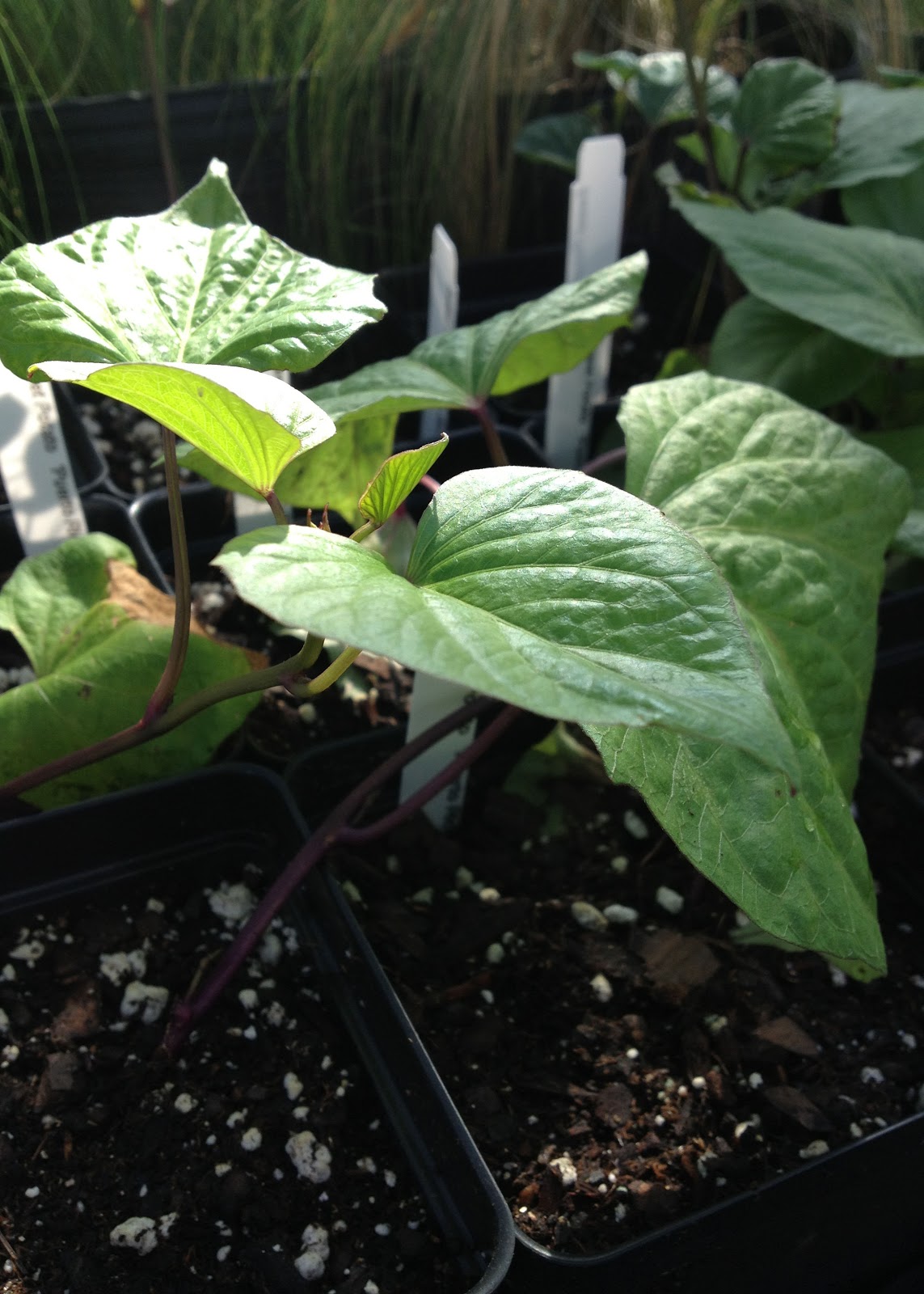
Sweet potato 'Puerto Rico'
Designed to grow larger potatoes on less land.
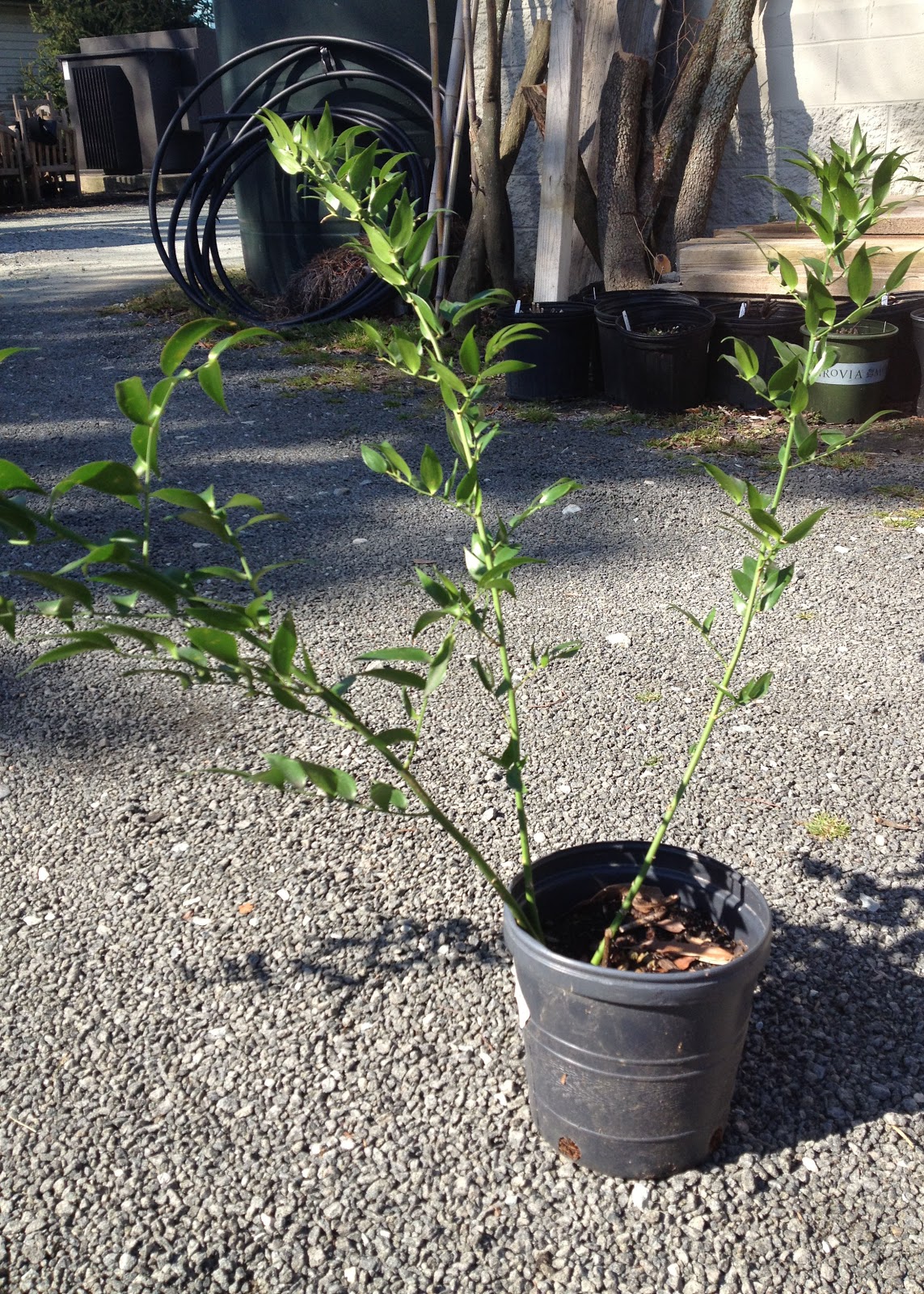
Alexandrian Laurel (Danae racemosa)
Slow-growing evergreen shrub that eventually yields orange fruits.
Foliage often used in floral arrangements. 
Oakleaf hydrangea 'Snowflake' (quercifolia)
A tall shrub that grows long flowers and florettes 
in double-flowered form.
Tall Bearded Iris (Iris 'Cross Stitch')
Has a beautiful May bloom.
Blueberry (vaccinum hybrids)
Perfect for growing your own tasty fruit at home!

Sarah P. Duke Gardens creates and nurtures an environment in the heart of Duke University for learning, inspiration and enjoyment through excellence in horticulture. The Gardens is at 420 Anderson St.

Columnist Emma Loewe is an environmental policy major at Duke University and a work-study assistant at Duke Gardens.  

Tuesday, March 26, 2013

Explore nature as a family at Duke Gardens


By Katie Jones
Photo by Megan Morr/Duke Photography

The garden—with all of its boundless life, activity and potential for discovery—is a perfect place to explore with the whole family. Whether your family simply wants to enjoy a day in the garden or wants to investigate nature or our food sources, Duke Gardens has much to offer.

“Nature is endlessly fascinating, and everything in the garden is exciting,” says Kavanah Anderson, education program coordinator at Duke Gardens.

Because there is so much to discover, parents should encourage their children to use their imaginations to guide them to the areas that intrigue them. The most important thing to do with your kids in the garden is  to build the sense that they can investigate and discover at their own pace, says Anderson, who puts together classes, camps and programs for children of all ages and their families.

“The families must feel like they have some ways to explore safely and know where to take their questions for satisfying answers,” she says.

Did you know that earthworms carry their eggs around their waists in a band—kind of like they are wearing a special kind of belt? It’s wacky facts like these that make people of all ages smile and want to learn more about nature’s inhabitants.

“Sometimes it’s really fun just to find a weed and pull it up to really look closely at the different parts of a plant,” says Anderson. “You’re looking up close at the stem and the roots and the leaves and finding flowers and talking about the function of the different parts.”

Duke Gardens’ Discovery Garden Family Workshops provide an opportunity to learn more tips and tools for discovery that you and the whole family can take to your own back yard. Upcoming workshops in the Charlotte Brody Discovery Garden (a new organic food garden) include “Insect Investigation” on March 28 from 3:45 to 5:15 p.m., "Three Sister Gardens" on April 24 from 1:30-2:30 p.m., and "Plant a Rainbow," on May 1 from 2-3 p.m. Although there are pre-determined themes to these events, many activities will be guided by the interests of the children and families in attendance.

Another great program for children to investigate nature more deeply is spring break or summer Nature Adventures Camps. Campers will prowl their way around the Gardens to discover animal habitats, learn how clever plants can be, and become scientists in these weekly day camps, beginning with spring break from April 1-5 and then running from June 10 to Aug. 2.

For more information about these and other family programs, please go to gardens.duke.edu or call 919-668-1707.

Sarah P. Duke Gardens creates and nurtures an environment in the heart of Duke University for learning, inspiration and enjoyment through excellence in horticulture. Duke Gardens is at 420 Anderson St.

Columnist Katie Jones is an undergraduate student at Duke and a work-study student at Duke Gardens. This column first appeared in the Durham Herald-Sun.

Path-closure notice: Asiatic Arboretum 3/27/13

Duke Gardens will close several paths on Wednesday, March 27, for removal of a pine tree that was damaged by storms and is a hazard.

Duke students and other visitors accustomed to walking from the Lewis Street entrance of the Asiatic Arboretum to Flowers Drive on the south side of the pond will need to take an alternate route on Wednesday. Other nearby paths will also be affected. Please see the map above for assistance.

We are sorry for the inconvenience and plan to have all paths open again on Thursday. Thank you for your cooperation.

Friday, February 22, 2013

Class Preview: Exploring Spring Flora

Hepatica Americana. Photo by Stefan Bloodworth
By Emma Loewe

When envisioning the floral transition into springtime, people usually imagine a sudden and dramatic bloom—an outburst of life that quickly drapes over the barren winter landscape. But botanist Ken Moore, former assistant director of the North Carolina Botanical Garden, disagrees. He says the cyclical nature of plants makes the rise to spring a more gradual one.

Moore will discuss this early spring period in a field studies class presented by Duke Gardens at Penny’s Bend Nature Preserve on March 16. He shared some of his observations in a phone interview this month.

Certain spring wildflowers on the forest floor take advantage of the dwindling sunlight of late winter, Moore notes. Spring ephemerals are plants “adapted to come out as soon as the weather begins warming up while there is still sunlight coming through the deciduous tree canopy of the forest.”

This year, these signs of the coming spring are surfacing especially early. “Because of the weird weather we are having, things are blooming earlier than normal.” Plants like hepatica take advantage of milder weather, he says, and “if you have a warm spell in winter, a few of them will come out on certain sunny days.”

Crane flower orchids are another instance of wildflowers that flourish outside of the typical flowering season. The flower’s leaves “come out in the fall on the forest floor, grow through the winter and disappear in April, taking advantage of the winter sun.” The products of this early development can be seen in the summer when its stems come up covered in a cluster of tiny orchids.

Once spring hits and life is restored in natural habitats, the forest takes on a whole new dimension, he says. “The plants and animals are responding to the return of the warmer growing season, so you’ll have lots and lots of activity—from plants growing and flowering to insects buzzing around and pollinating to the birds going through their life cycle. You’re looking at everything.”

Nature’s seasonality limits every life span, Moore says. For this reason, observing something in blossom is a true gift. “Every time you see a native plant in bloom, it's really special. It's like a present—taking a walk in the woods means seeing what little presents nature has given you.”

Consider joining Moore to see what gifts nature has to offer next month. His “Early Spring Jewels: Field Studies” hike runs from 9:30 a.m. to 12:30 p.m.

TO REGISTER: please call 919-668-1707, email slsmith@duke.edu or go to gardens.duke.edu to register or for more information. 

Sarah P. Duke Gardens creates and nurtures an environment in the heart of Duke University for learning, inspiration and enjoyment through excellence in horticulture. The Gardens is at 420 Anderson St.

Columnist Emma Loewe is an environmental policy major at Duke University and a work-study assistant at Duke Gardens. This column originally appeared in the Durham Herald-Sun.


Monday, February 4, 2013

Tango & Swing weekend: dances & workshops

Chris & Holly Owens

Duke Gardens' new Health & Wellness Series continues this weekend, Feb. 8 & 9, with a fun-packed schedule of dances and beginner workshops.

TANGO
On Friday, Feb. 8, we'll host an Argentine tango milonga (dance) in the Doris Duke Center's Kirby Horton Hall (with a gorgeous hardwood floor that's perfect for dancing). Jason Laughlin and Cecilia Pagani, of Tangophilia, will teach a beginner lesson from 7-8 p.m., which is included in the price of admission. You need not show up with a partner. Everyone will rotate partners (except those who prefer not to), so you will get to know others at the event very quickly.

The dance will run from 8-11 p.m. This is Argentine tango, not the choreographed American tango you may have seen on "Dancing with the Stars." Argentine tango is a gorgeous dance to experience or even just to watch. Check out the video below to see the dance style you can expect at Friday's dance. Argentine tango can be danced in close embrace or open embrace. Beginners generally dance in open embrace.

SWING 
On Saturday, Feb. 9, we'll start the day earlier with some dance workshops with Chris Owens & Holly Beeson Owens, of What a Shuffle and the Eastern Balboa Championships. We'll start with a beginner Balboa workshop from 2-3 p.m. Then Chris & Holly will build on that beginner class with a beginner 2 workshop from 3-4 p.m. From 6-7 p.m. they'll offer a beginner Charleston workshop.

Then you can stay for the evening swing dance, which runs from 8-11 p.m., after a 7-8 p.m. beginner East Coast Swing lesson with Chris & Holly that's included with the dance admission. DJs Chris Owens & Ray Crampton will spin tunes through the evening.

TICKET INFO + MORE
Please see our swing dance web page for more info about workshop fees, dance tickets and other details, including a discount on advance tickets for Duke staff & students and members of Duke Gardens, CDC & TSDS. More info on the tango milonga is here. We'd love for you spread the word about these events via our Facebook page, too.

VIDEOS 
Below are some videos to give you an sense of the dances and what to expect. The first is Chris & Holly previewing the Balboa workshops. The second is a demonstration of some Charleston moves. The third is Jason and Cecilia dancing tango. And the last one is an East Coast Swing demo.