Showing posts with label nature. Show all posts

Thursday, April 18, 2019

Fun Alternatives to Easter Egg Hunts

Families love to explore Duke Gardens together.
Photo by Bill Snead.

Easter egg hunts are great fun in your home, but they can create problems in Duke Gardens. We want to remind visitors that Easter egg hunts are not permitted in Duke Gardens, and to offer some fun ways for visitors—particularly youngsters—to celebrate Easter and enjoy all springtime visits together.

Why no Easter egg hunts at Duke Gardens? We ask visitors to refrain from egg hunts so that we can keep the fragile plants in this botanic garden safe from excited little hands and feet searching high and low for eggs and candies. We also ask visitors to help protect wildlife, so animals and birds won't try to eat the large number of forgotten eggs and candies later. Many people are unaware that chocolate can be especially harmful to dogs, and we want visiting dogs to be safe, too.

What to do instead? We'd love to hear your ideas. Here are some of ours:

Explore the Discovery Garden, a sustainable, organic food garden, to see fruits, vegetables and herbs getting their start for the season. You can also learn a lot about Earth science, chickens, and bees! We have lots of bee houses in the garden, and also a new bee observation hive where you can safely peer at the bees at work.
New bee observation hive at the Burpee Learning Center. Photos by Nick Schwab.

* Play a game of Search with Your Eyes (not hands, please): Kids can have lots of fun looking all over the Gardens for signs of spring, from new buds to colorful blossoms. How many times can they find their favorite color? How about familiar shapes that appear in leaves and flowers? How many circles, triangles or squares can you find? If you visit our information desk before heading out into the Gardens, we'll give you a free Scavenger Hunt for young visitors to follow.
From beehouses to flowers, there are many cool shapes to observe throughout the Gardens.
Photos by Nick Schwab and Cathi Bodine.

Fun activities to print out in advance: Plan your family visit ahead of time with the activities on our Self-Guided Garden Resources webpage.
Great blue heron and ducks.
Photo by Jordan Montgomery.


Bird watch: From a great blue heron to a red-tailed hawk, ducks and many other species, lots of birds will be enjoying the spring weather in the Gardens this weekend. How many different birds can you spot? Any you've never seen before? Check out the informational signs at the Asiatic Arboretum Pond or the Bird Viewing Shelter in the Blomquist Garden of Native Plants, and you can write down species names to learn more about when you get home.

* Shutterbug Madness: We'd love to see your favorite photos that celebrate spring in Duke Gardens. Please share them on our Facebook page or on Instagram (tag us at #dukegardens).

*Easter Sunday Service: Join Duke Chapel Sunday for a 6:30 a.m. Easter Sunrise Service on the South Lawn of Duke Gardens. Please don't forget to bring a flashlight to help find your way to the lawn in the morning darkness, and a towel to wipe the dew from your chairs. If it rains, the services will be in Duke Chapel.

Thank you for joining us in celebrating spring and protecting the plants and animals that we all love.

Sarah P. Duke Gardens creates and nurtures an environment in the heart of Duke University for learning, inspiration and enjoyment through excellence in horticulture and community engagement. Duke Gardens is at 420 Anderson St.

Monday, April 2, 2018

Spring Plant Sale Preview: Peonies

Paeonia 'Emma Klehm'. Photo by Chris Holaday.
By Annie Yang
Duke class of 2020

Peonies are always a crowd-pleaser at Duke Gardens' Spring Plant Sales. So local gardeners will be thrilled to hear that we will have a whopping 17 cultivars at this year's sale, from 'Moonstone' to 'Coral Sunset' and 'Pink Parfait'. The sale is Saturday, April 7, with a preview sale for members on Friday evening (details below). Here are two cultivars that will surely pique gardeners' interest.

Paeonia ‘Emma Klehm’

The deep, rich pink petals of Paeonia ‘Emma Klehm’ are guaranteed to attract the attention of any garden visitor. This striking flower gets its name from Emma Klehm of the Klehm family, who have had a long history of growing flowers and producing new hybrids. One has to wonder what kind of woman Ms.  Klehm was to inspire the name of such a bold peony!

‘Emma Klehm’ is a later bloomer, showing off its splendid colors from late spring to early summer, but the wait is quite worth it. Long-lived and relatively easy to grow, this plant prefers moist but well-drained soil and, in a warmer climate like North Carolina, thrives under partial sun.

Its vibrant colors make ‘Emma Klehm’ an easy choice for cut flower bouquets or as a border plant. Consider grouping it with other plants so its striking hues can really pop out and brighten up any garden.

Paeonia 'Monsieur Jules Elie'. Photo by Chris Holaday.
Paeonia ‘Monsieur Jules Elie’

This peony was first introduced in 1888, but its huge bloom, ruffled light pink petals and wonderful fragrance have made it an enduring garden favorite. Perhaps inspired by French painter Jules-Élie Delaunay, this peony cultivar is truly a work of art.

Long-lived, virtually pest free, and resistant to deer and rabbits, ‘Monsieur Jules Elie’ is an ideal plant for gardeners looking for intense color and vibrancy but relatively little hassle and maintenance. ‘Monsieur Jules Elie’ enjoys partial to full sun and fertile, well-drained soil, like many of its peony cousins. Some staking may be required to support its large, heavy blooms when they appear in late spring or early summer.

The beauty of ‘Monsieur Jules Elie’ can be showcased as a cut flower or in a number of different roles in the garden. It can stand on its own as a specimen plant, work together in groups of other plants, dot the border of a walkway or driveway, or serve as an informal hedge. This versatile and dependable plant is a delightful addition to any garden.

SPRING PLANT SALE INFO:
Date: Saturday, April 7, 2018
Time: 8 a.m.-noon
Preview sale for members: Friday, April 6, 4-6 pm.
Membership plant sale benefit: Duke Gardens members get 10% off & a full list of plants in advance! Join online or on site.
Parking: Free.
Pets not permitted
Wagons + boxes: Our supply is limited; please bring your own if possible, and you'll have more time to spend gathering beautiful plants.
Your support helps Duke Gardens to provide summer internships to aspiring horticulturists from across the nation.
Please see our event page for more information, and we'd love for you to spread the word by sharing the event on Facebook and inviting your friends.
Thank you!

Wednesday, October 4, 2017

Classroom Open Hours teaches children and parents


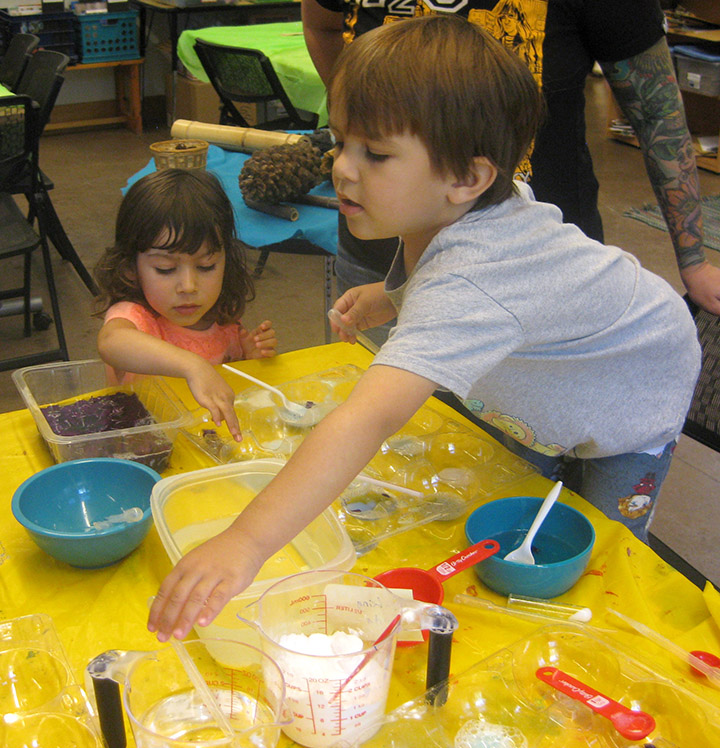
Classroom Open Hours includes access to our nature museum.
Photo by Sheon Wilson
By Sheon Wilson
Publications Coordinator

A 2-foot-long wasp’s nest, beaver and coyote skulls, brilliant feathers from an Amazonian parrot—it’s not every day that a child encounters such unusual study tools.

But at Duke Gardens’ weekly Classroom Open Hours, homeschool children and parents can gather for unique hands-on scientific adventures in an exciting learning laboratory.

The open-ended sessions—which run from 1 to 3 p.m. on Tuesdays through Nov. 28 and then resume from Jan. 16 to Feb. 27—give parents and children access to nature-related lesson plans, curriculum aids, microscopes, science-themed books, and a wide variety of unusual specimens and artifacts they probably don’t have at home.

“The classroom hours allow us to nurture learning and discovery in a manner that would otherwise be abstract,” says Cheznee Johnson, whose son, Harrison, attended nearly every session last year.

“Harrison has such a curiosity and interest in the world around him and how things work,” she says. “Every Tuesday he gets to see and experiment with all sorts of new and different things in the classroom.”

The sessions are unstructured so children and adults are free to explore the curiosities and find what piques their interest.

“We see it as a great way for families who can’t devote a room to all the things we have collected to have access to our resources, plus our teaching experience,” says Kati Henderson, a staff assistant in children’s education at Duke Gardens.

It's not every day you see a paper wasp nest up close.
Photo by Sheon Wilson
“Some parents have really enjoyed the experiments we do and have said, ‘Thank you for setting this up, because I wouldn’t have done this at home since it’s way too messy.’ ”

Parents struggling to create a lesson or activity for particular topics can ask the session leader for advice.

“We’ve made lesson plans for almost every discipline in our Garden programs,” Henderson says.

To prepare for a recent session, Henderson set up five tables. To appeal to preschooloers, she had materials for touching on one table, including a tub of sand and water.

Parents and children have many options to choose from
in Classroom Open Hours. Photo by Kati Henderson.
Another table had science magazines and old Duke Gardens calendars for making collages, along with an activity suggestion: Cut out a picture of an animal, create a habitat for it using more pictures and then collage them together. Nearby were boxes of cut branches for stacking and building structures. A fourth had a variety of leaves with drawing and dissecting materials for a hands-on nature study. And the table for parents had resources galore.

For students on school break, Classroom Open Hours can slow the brain-drain by infusing fun self-directed studies into their days off. It’s also popular for people seeking activities for visiting children.

“It gives the adults a bit of a break,” Henderson says. “They don’t have to choose the activity, gather the materials or plan the lesson. Because it’s drop-in, you can come when you want.”
Children love exploring our learning
lab. Photo by K. Henderson.

PROGRAM DETAILS:

DATES: Tuesdays through Nov. 28, and Jan. 16-Feb. 27

TIME: 1-3 p.m. Drop in anytime.

FEE: $3 per child per session; $40 per child or $120 per family for all sessions.

MORE INFORMATION: See our website to learn more about this and other programs for children and families, and to begin the registration process or ask questions. You may also call or email us directly at 919-668-1707 or gardenseducation@duke.edu.

Friday, September 1, 2017

Citizen Science: Children Help Crowdsource Vital Data


By Sheon Wilson
Publications Coordinator

Undaunted by drizzle, 13 teens and preteens scurried outside, umbrellas, clipboards and data sheets in hand.

Raindrops fell on blooming water lilies, lotuses and other aquatic plants floating on a pond wrapped in flagstone and populated by frogs, turtles and a wide variety of insects at all stages of their life cycle.

In their T-shirts, shorts, sneakers and sandals, the teens and preteens looked like students enjoying a summer break. But their mission was bigger. They were citizen scientists, collecting data on dragonflies.

Citizen science, which involves members of the public in gathering and analyzing data to aid professional researchers, helps to advance global scientific knowledge. People of all ages and identities can participate in scientific research from anywhere in the world, sometimes providing crucial local data unavailable in laboratories.

At Duke Gardens, these young “dragonfly detectives” were enjoying a weeklong citizen science workshop, one of a wide array of programs that Duke Gardens offers to introduce children and families to the wonder and complexity of the natural world.

On the first day of “Dragonfly Detectives,” participants learned the five dragonfly species they would observe during the week. In the next few days, students also learned about dragonfly behavior, life cycle, and how to differentiate dragonfly nymphs from other aquatic insects.

Sheya, a rising sixth-grader, recorded tips for spotting common whitetail dragonflies in her field journal. They’re shorter than other dragonflies, she wrote. The females have brown abdomens, and all have blackish-brown bands on their wings. “This makes me feel needed because this stuff is going into real research,” she wrote about being a citizen scientist.

Like professional scientists, the children made hypotheses about dragonflies before they ventured out the next day. “I believe the worst weather for a dragonfly will be rain, even though they have muscles on each wing,” Jeremiah wrote in his “Dragonfly Detectives” journal.

Day two was drizzly, but the children headed outdoors with data sheets and simple devices. They recorded the number and types of dragonflies observed, wind direction and speed, humidity, amount of sunlight and more. Sixth-grader Alexander, carefully inspecting the pond’s edge, retrieved a dragonfly exuvia, the inflexible exoskeleton that the insect molts, or sheds, several times in its short life.

The rain seemed to discourage dragonflies from gathering en masse around the pond. But the children’s newly trained eyes caught a few.

“That one looks like a green darner,” sixth-grader Jeremiah said, “but I think it’s a look-alike.”

Campers identified a wandering glider early in the day. But they did not see any dragonflies during their official three-minute count, one of two data collection exercises they did that day.

Students were initially dismayed with their official counts of “0,” but Anderson brought them back to the scientific process and their hypotheses about dragonfly behavior in the rain. Even seeing nothing is data to report. What did their data teach them?

By seeing no dragonflies in the dismal weather, Jeremiah had gathered evidence to support his hypothesis that the worst weather for dragonflies is rain. This and other results uncovered by the “dragonfly detectives” would be sent on to the statewide project to contribute to large-scale scientific research.

That resonated with the students. “I feel good because people are actually listening to children and collecting information from them,” said Freya, a sixth-grader. “I feel honored!”

Students continued questioning, exploring, and discovering over the rest of their week as citizen scientists. They formally presented their findings, and left with even more questions.

Inquiry based outdoor exploration plays a role in all classes and workshops on Duke Gardens’ fall/winter roster, from Nature for Sprouts (for children ages 3 to 5) to the Artists in the Gardens series (ages 9-12) and the Naturalist series (ages 5-6 or 7-9). Please see Duke Gardens’ website for a full schedule of children and family offerings and programs for school groups, and to register online.

Friday, July 21, 2017

Cultivate Creativity at Middle School Camp

Teens and tweens may work on visual art, music,
journaling or poetry at Artists in the Gardens camp.
Photo by Kavanah Anderson.
By Sheon Wilson

Camper Sonata squatted down to look into Duke Gardens’ Millstone Pond for signs of turtles, her braided hair falling over the collar of her cartoon bear raincoat. She concentrated intensely.

“Do you see it, Sonata?” Nature Adventures Camp counselor Hope Wilder asked, as a dozen other grade school students craned their necks to see. “Its little head is rising over the water.”

Sonata, her eyes glistening, smiled and nodded excitedly.

Those 10 minutes spent sharpening their powers of observation enhanced the artwork the campers would create later that week, including nature journals, drawings and craft projects. Teens and tweens entering grades six through eight will get a similar opportunity to explore the relationship between art and science in Duke Gardens’ Artists in the Gardens day camp that runs from Aug. 7 to 11.

“It’s my philosophy to give them a choice and see what they make,” Wilder says. “The idea is that the same observation skills that apply to science apply to art. We provide the materials and the framework, but what the kids do with it is up to them.”

Picking their own materials and type of art is part of the fun. Campers might use mixed-media, sculpture, music, poetry or drawing for their art project. In addition to learning about the formal elements of art, campers will experience the way garden design affects what they observe during their garden explorations.

During Sonata's camp in June for children entering third through fifth grade, the children walked along a stream near the Iris Bridge in the Historic Gardens, clutching small nets and craning their necks to see whether tiny fish or tadpoles would swim by.

“Don’t fall in ‘accidentally on purpose,’ because the point is to keep the animals safe,” Wilder said, after passing out plastic containers that the children would use to hold what they caught. “If you catch these little creatures, please keep them for only 10 minutes, because there isn’t enough air for them to breathe longer than that.”

A camper named Anna stared into the water for a couple of minutes before declaring, “We can’t see to the bottom. There are no fishes here.”

“It takes time to find them,” Wilder said, knowing that the more the children embrace stillness, the more they will notice all the wonders of the world around them. “The fish like to hide in the bushes and grasses so you can’t get them. You have to be patient until they are ready to come out.”

Teen campers will also have ample chance to deeply explore Duke Gardens. Then as they delve into artwork in their choice of media, their observations about nature’s beauty, logic and mysteries will further inform their art.

“The goal is for teens to be immersed in this process that encourages their creativity,” says education program coordinator Kavanah Anderson. “Art is the basket that holds all the elements of the camp.”

REGISTER NOW: Artists in the Gardens camp will run from 9 a.m. to 1 p.m. August 7 to 11. There is no after-care for this camp, but we will offer an afternoon Citizen Science program for middle-school students. For more information about Duke Gardens’ themed Nature Adventures Camp summer and spring break camp series, or to register for the teen camp, please see our camps web page.

Blogger Sheon Wilson is Duke Gardens’ publications coordinator.

Friday, April 7, 2017

Event Preview: Shinrin Yoku Meditative Walks


The Historic Gardens and Iris Bridge.
Duke Gardens visitors often remark that they feel calmer and more focused after a stroll through the Gardens. Consider taking this benefit to the next level by joining forest therapy instructor Dana Malaguti for a Shinrin Yoku meditative walk.  Dana spoke with us about this intriguing practice that is gaining popularity.
Fountain at the entrance to the Culberson Asiatic Arboretum.

In what ways is being in nature calming, and how does Shinrin Yoku enhance that effect?

People seem to be “wired” for nature – we evolved out of the forests and, deep inside, we recognize the forest as home. Shinrin Yoku helps us tap into that calming space of nature with a mindfulness approach.

Shinrin Yoku translates as “taking in the forest atmosphere” through our senses.  A walk in nature can calm and soothe the mind, and in the process change the workings of our brains in ways that improve our overall mental health. Research studies demonstrate that Shinrin Yoku reduces stress and promotes health by improving our cardiovascular and immune systems as well as elevating our mood and increasing our ability to learn.
The Memorial Garden.

How might a typical Shinrin Yoku gathering unfold?

It begins with an introduction and overview of the walk. I will guide you to an immersive experience through sensory invitations. As I've led these walks I've been surprised at how powerfully these simple invitations connect people to the environment around them and their own emotions.

This walk, which is under a mile, is not exercise or hiking. It is a wellness practice that encourages slowing down, walking, sitting, breathing, observing and opening up your senses to the world of nature in the present moment. We will end our walk with a refreshment that is grown in nature, so we will leave our experience with the forest inside of us.

Is there an age limit for this class, or can children participate?

For this particular group, I would say 18 years old and older is ideal.  This is a very mindful and personal practice for each individual. However, there is not an age limit if a particular individual is mature and understands the guidelines.
The Virtue Peace Pond.

What if I have a hard time walking, or if sitting still and trying to meditate hasn’t worked for me in the past?

The walking time is very slow and mindful. And if people have a hard time sitting still, movement is encouraged. Some people start doing yoga poses during an invitation. They may choose to wander, make art, do journaling or do something playful. While Shinrin Yoku is an organized practice, there is no “right way.”

Can I learn to practice Shinrin Yoku in my own back yard or neighborhood park?

Bird Viewing Shelter in the Blomquist Garden. 
Yes. Many people who have gone on one of my walks have found them to be so beneficial that they have created walks of their own. Others have shared that they have found “sit spots,” a place where they sit in nature and tune in to their senses on a regular basis.

Photos by Duke Gardens volunteer photographer Lori Sullivan.


DETAILS:
Update with 2018 dates and links for more info:
April 12, 5:30-7 p.m.
May 17, 5:30-7 p.m.
June 7, 5:30-7 p.m.

2017 dates: 3-hour walk (April 27 or June 8), 5:30-8:30 p.m. $55 for Gardens members; $68 general public.
1.5-hour walk (May 18), 6:30-8 p.m. $45 for Gardens members; $55 general public.

To register, please call 919-668-1707 or email gardenseducation@duke.edu.


Tuesday, October 4, 2016

Class Preview: Make Your Garden Sing

Add "music" to your garden with ornamental grasses.
Photo by Bob Ayers.
By Rose James T'20

Plants whisper, seed pods clack and the wind rustles through leaves outside your door. A bird trills and a frog croaks, perhaps bringing you back to childhood games of hide and seek in your favorite neighborhood garden. A nearby brook bubbling might bring you back to a pleasant afternoon catching toads with your cousins or fishing with your grandfather.
Plants that attract birds will make your garden sing.
Photo by Charles Twine.

Our sense of sound is one of the strongest triggers for memories. A sound can bring to mind a person or place that you loved, or a favorite pastime. Sometimes this can be a happy accident. But like a composer, you can also shape your own environmental symphony to spark joyful memories or create new ones.

Whether your garden spans many acres or a small bed, consider adding sound to your design principles of form, function and color. Hilary Nichols can help you weave those sounds in a new two-session class at Duke Gardens, “I Need a Plan: The Musical Garden.”

Nichols is garden manager at the Durham nonprofit SEEDS, an urban sanctuary focused on promoting the principles and practice of sustainable agriculture, organic gardening, food security and environmental stewardship. She strives to live her life intentionally, and she loves sharing her design and horticultural expertise to help gardeners at all ability levels create gardens that sing to ears and eyes alike.

Streams and rain gardens are perfect to add a croaking frog
or two to your chorus. Photo by Sue Lannon.
The plants you choose, and the way you arrange your plants, will influence the musicality of your garden, Nichols says. Enjoy the wind strumming the blades of ornamental grasses or rattling autumn leaves. Place a large-leafed plant near your favorite window to enjoy the rain pattering on the leaves. Select plants that attract insects or birds to add a percussive buzz and lilting song. Study the life-cycle of your plants to create a garden in bloom throughout the year, drawing animals to your garden in different seasons.

Sign up for “The Musical Garden” and Nichols will have your garden singing in no time.

“I Need a Plan: The Musical Garden” meets on two Tuesdays, Oct. 11 and 18, from 6:30-9 p.m. To register, or for more information, please call 919-668-1707 or email gardenseducation@duke.edu.

Blogger Rose James is a Duke freshman and work-study marketing assistant at Duke Gardens. 


Tuesday, April 21, 2015

"The Artful Garden" with W. Gary Smith - an anticipatory stroll


Chinese snowball viburnum (Viburnum macrocephalum)
in the Page-Rollins White Garden.  
By Kaitlin Henderson

Inspired by W. Gary Smith's upcoming lecture at Duke Gardens on Thursday evening, and his award-winning book, From Art to Landscape: Unleashing Creativity in Garden Design, I took a walk through Duke Gardens today with the idea of "artfulness" in mind.

To me, artfulness in the gardens means the careful but ever-present interplay between nature and human design. It wasn't something I had deliberately looked for throughout the entire gardens before, and I found myself seeing artful things with every step I took.

As I began my stroll in the Page-Rollins White Garden, I noticed the wonderful interaction of textures around the Chinese snowball viburnum (Viburnum macrocephalum) pictured above. The puffs of flowers are light and float above the leaves of the many green plants, and the different types of stone nearby add their own unique, contrasting texture.


I made my way into the Spring Woodland Garden (above) and looked at an area I've seen countless times, but with new eyes today. I love this view from the large wooden bridge down the small creek, and today I realized some of that is because of the wonderful glimpse you get of such a picturesque scene. But this photo doesn't do it justice. Actually standing in this spot, you get to experience the feeling of the light breeze and the sound of birds chirping as they flit among the trees.


As I walked into the Culberson Asiatic Arboretum, I was reminded that artfulness doesn't need to be big. It can involve just one plant, like this Japanese maple (Acer palmatum ssp. dissectum 'Ornatum'). The blanket of leaves has such exquisite draping, and there's a playful hide & seek of that external shell and the partially revealed internal branches.


Artfulness can even involve a dead piece of a plant, as I found a little farther on my walk. This cast-off branch makes a beautiful arch with the sun streaming down on it and a vine twirling up. I think it's a fantastic example of an artfulness that comes from working with the garden -- recognizing what this could contribute and deciding to leave it in the garden.


Leaving the Asiatic Arboretum, I came upon this scene of the creek running through the Hanes Lawn. It reminded me that artfulness doesn't need to be so subtle that it hides the human hand and imagination that created it. To me, this area is an incredibly successful instance of making a landscape design obvious and inviting. Other people clearly got the same message that this is an enjoyable setting, as it is a much-visited spot.


Deliberate artfulness can show itself simply in the horticultural structures, too, such as these subtle but unhidden guide wires for the new native wisteria (Wisteria frutescens) growing onto the pergola after the recent Pergola Restoration Project.


Entering the Blomquist Garden of Native Plants, I was reminded of the artfulness that can guide your experience of a garden beyond the plants growing there. I took a tour of the Blomquist with curator Stefan Bloodworth earlier this year, and one of the many things he talked about were these new wooden signs. Everything used to make them, from the different woods to the font, was carefully chosen to create a cohesive experience of the Blomquist Garden. This balancing depth of thought that artfulness brings, which considers the natural space and how people design and experience it, can apply to all aspects of a garden.


In the end, though, my favorite examples of artfulness are the quiet, contemplative spaces that showcase a harmony between people and plants. In the spot pictured above, I love the balance of the gardeners' design of a sheltered resting place, the compliance of the Possumhaw (Ilex decidua) that encloses the space, and the enjoyment of those who come upon it.

It's fun to think about gardens we visit, and our own gardens that we tend, from an artful perspective.  You don't need to be a trained artist to appreciate and conjure artful flourishes all around you. But it's a special treat to have a trained eye such as W. Gary Smith's to get the creative wheels turning even more.

Join us for "The Artful Garden," on balancing the physical realities of your garden with your artistic imagination, on Thursday, April 23, 2015. Smith will be available after the talk to sign copies of his book. For more information and to register, please call 919-668-1707.

Kaitlin Henderson studies interdisciplinary engagement in Duke's Master of Arts in Liberal Studies program.

Thursday, April 16, 2015

Plants of Distinction Series

by Erika Zambello

It isn't often that you see a group of people kneeling on the trail, faces full of daffodils. But that's just what we were doing in Duke Gardens' Plants of Distinction class "Scents of Spring."

The Plants of Distinction series provides participants with the opportunity to look at specific plants in the Gardens with more focus, whether those plants provide color, delight, seasonality, or, in our case, fragrance. Spring is an especially fragrant time to be in the gardens, both for pleasing and not-so-pleasing odors. Jason Holmes, curator of the Doris Duke Center Gardens, led us on a walk to learn about plants that would charm us with their springtime perfumes.

Cherry trees in the Entry Allée
Though we were focusing on the scents of spring, its colors were hard to ignore. The cherry trees were in full bloom, decorating the Gardens with their pink and white blossoms. We stopped a few times near the Doris Duke Center and in the Perennial Allée, gradually making our way to the Terrace Gardens. There we were greeted with a wealth of flowers to pause over and smell.

Peach blossoms
Hyacinths (Hyacinthus orientalis), which grow in multiple colors throughout the Gardens, have an especially sweet fragrance that I just loved. Directly across from them was a bed full of pansies and daffodils, showing off their yellow and purple colors. Though the Narcissus 'Falconette' variety have smaller petals than others, Jason explained that in his experience, the smaller flowers actually have the better and more powerful fragrance. Directly above the daffodils were the peach blossoms, and though they only had a faint smell the tree was jam-packed with beautiful blossoms that I could not stop photographing.

Mixed bed of pansies and daffodils
We moved down the Terraces and up above the fish pool to take in the delicate aroma of the winter honeysuckle (Lonicera fragrantissima), and then up through the Memorial Garden and Butterfly Garden before heading into the Woodland Garden. Throughout the tour we had many opportunities to test the fragrance of each flower that Jason described, as well as learn the best growing conditions for the plant and how we might use them in our own gardens. By the end of our walk, I had a whole new appreciation for the wonders of the spring season.

The final course in the spring and summer Plants of Distinction series is "Early Summer Blossoms," which will be led by Bobby Mottern, director of horticulture. Learn which plants ornament our early summer in this stroll through the Gardens to see fringe trees, late magnolias, peonies, and more. The "Early Summer Blossoms" walk will be on Thursday, June 11, from 2:30 to 4 p.m.

The class fee is $7; $5 for Gardens members and Duke students/staff. Participation is limited to 15 only, so don't miss your chance to learn more about Duke Gardens' Plants of Distinction!

Blogger and photographer Erika Zambello is a graduate student studying ecosystem science and conservation at Duke's Nicholas School of the Environment.

Thursday, March 12, 2015

Art and Nature: Artwork Inspired by the Historic Gardens at Duke Gardens

"Spring Blooms," by Sally Sutton.
By Rachel Weber

A visitor need only take a quick stroll through Duke Gardens to appreciate the beauty and wonder of nature. For many local and regional artists, Duke Gardens serves as inspiration for their creative works. This month, we will celebrate these artists. Join us at the Doris Duke Center between Saturday, March 14, and Friday, March 20, to experience artwork inspired by the Terrace Gardens, the Butterfly Garden and the Perennial Allée.

Horticulture has roots in both science and art. From a scientist's perspective accurate observation and communication is the cornerstone of successful horticulture. At one time all scientists drew often highly detailed renderings to record the specific features of a plant, where it grew and what grew alongside it. From the artist's point of view, design abilities and compositional skills are needed to create beautiful gardens.

In the second annual Art and Nature Exhibit, Duke Gardens will feature work by local artists inspired by the Historic Gardens at Duke. The work will include both 2- and 3-dimensional pieces in both representational and abstract styles.

Ceramics by Sasha Bakaric
One of the exhibiting artists is North Carolina native William Alberti, a member of the American Society of Botanical Artists. As a botanical illustrator, Alberti loves the native and exotic plants in the Gardens. But what he is most inspired by is the hardscaping of Duke Gardens--what he calls the Gardens' "bones."

"The bones of the Gardens create a structure for renewal," says Alberti, who was also part of the inaugural exhibit. "Every year things change, all the flowers change, but the bones kind of stay the same."

Alberti says he's excited that this year's exhibit will be open longer so that more members of community can enjoy the display.

Artist Ippy Patterson calls the exhibit energizing and democratic, "a diversity of artists and media and viewers together in a beautiful room celebrating nature's flora."

The exhibit will showcase a diversity of subjects, media and styles, highlighting the varied connections that artists have with the Gardens. Up to 40 works from more than 20 local artists will be on display.

"Blue Heron & Water Lilies," by Kathryn DeMarco
The opening day for the exhibit is Saturday, March 14, from 9 a.m. to 4 p.m. That evening, you are invited to join us for a reception with the artists from 4:30 to 6 p.m., where you can ask the artists questions, discuss their work, and share your own connections to the Gardens. The artwork will be on display until Friday, March 20, at 4 p.m. Admission is free. The exhibit is open during Doris Duke Center hours.

Rachel Weber is junior at Duke University majoring in Public Policy with a certificate in Energy and Environment.

Tuesday, June 26, 2012

Nature journaling day camp for tweens

By Jan Little
Photo by Lauren Sims

Artists, gardeners, writers, scientists and others have kept journals in which they can jot notes, observations, ideas they want to explore and details to be drawn. Leonardo da Vinci’s journals are maintained in a number of museums around the world. In his journals he kept everything from grocery lists to sketches of helicopters!

Journaling is a way to focus your thoughts and explore a concept without losing track of ideas. For an artist, a journal provides a quick way to record a view or a detail for later use. Some artists work on small versions of a larger project in their journals first, searching for just the right composition to help them move forward on the full-size version.

Children ages 11 to 13 will have the opportunity to try out nature journaling in “Drawing on Nature,” two one-week Nature Adventures Camp programs in August. As a group, they will explore nature in the Gardens. Individually, they can record notes, sketches, ideas, poems and observations. The journal requires careful observation and helps develop a vivid understanding of nature, perhaps even a delight in your findings.

The children will be following a popular tradition. Thomas Jefferson maintained decades of garden journals in which he recorded a calendar of when seeds were sown and seedlings planted, the timing and amount of harvest, and plant evaluation. Those journals are still being studied and used by gardeners and researchers to understand gardening and landscaping in Jefferson’s time.

Chuck Hemric, Duke Gardens’ volunteer director and an avid gardener, maintains a garden journal that began when he moved to his home and garden eight years ago.  It helps him track types of plants, planting locations, the plant source, weather trends, and seasonal notes such as first bloom or first fruit.
“It helps me learn and remember what conditions work for a plant and determine just what is meant by part shade, full shade, so I can learn the conditions unique to my garden in which a plant will thrive,” he says.

Self-discovery is inevitable as you maintain a journal, and it will be fun to see what the youngsters who participate in “Drawing on Nature” will learn about themselves. The program will be guided by local artists and experienced journal-keepers, who will help the children pursue their own interests and hone their skills. The children need not have exceptional artistic or writing abilities to participate.

Camp dates & information: Drawing on Nature camp runs from 8:30 a.m.-1 p.m. Aug. 6-10 or Aug. 13-17 (children may attend both). Extended care is available from 1-4 p.m. The cost is $150 per child per week; $75 more per week for extended care. For complete information, please visit gardens.duke.edu or call 919-668-1707.

UPDATE: We regret to announce that we are canceling the journaling camp due to low enrollment. We thank the many families who filled our other summer camps to capacity, and we look forward to shaping another exciting camp season next summer. If there's a themed camp you would love to see offered, please feel free to suggest it to education coordinator Kavanah Anderson.

Sarah P. Duke Gardens creates and nurtures an environment in the heart of Duke University for learning, inspiration and enjoyment through excellence in horticulture. The Gardens is at 420 Anderson St.

Columnist Jan Little is director of education and public programs at Duke Gardens. This column first appeared in the Durham Herald-Sun

Tuesday, April 10, 2012

New & Returning Children & Family Programs

By Kate Blakely

This time of year, inchworms seem to dropping from trees everywhere you look. Do they make you exclaim with excitement or shiver with fear? In a new class for kids, “Heroes and Villains,” we will learn about the ways these critters and more interact in nature.

“Heroes and Villains” is one of several exciting classes in the Children and Family series this spring. Most classes are new, but we will repeat some favorites, says Kavanah Anderson, education and programs coordinator. The topics will rotate seasonally.

When you are surprised by a spider, do you stand your ground or does it send you running? The argiope garden spider can be a formidable sight, with its size, striking yellow and black pattern, and zig-zag web. Beetles, earthworms, ticks, centipedes—these creatures all play a role in the natural world. Do you ever wonder what relationships they have with each other? Do they help or hurt each other? Come to “Heroes and Villains” and find out. The class is on Wednesday, April 25, from 2:30-4 p.m. It's for children ages 9-11.

A favorite from last year is “Drip Drop: Be a Raindrop for a Day,” coming up Saturday, April 28, at 10-11:30 a.m., for ages 7-9. As they say, April showers bring May flowers. From showers to flowers, water makes an incredible journey. Children can join us for a trip around the Gardens as we learn about the water cycle. We’ll study how and where rainwater travels, how gravity affects water’s journey, and how water drains through different types of soil. We’ll also conduct scientific experiments to study water’s movements.

Participants will learn how to make “rain in a bag,” a miniature water cycle they can take home with them. So get your imagination running, and come on out to the Gardens. We’ll all be raindrops for the day! Please don’t forget to register in advance.

Caregivers, make sure to come along for our family classes. We ask adult chaperones to accompany our youngest Gardens visitors. There’s an important reason behind this.

“One of the main motivations in our request for adult participation is to help caregivers develop a relationship with nature alongside their children so that they’re exploring nature together,” Anderson says. “Our hope is that this relationship continues beyond their time in the Gardens.”

All Children and Family programs are $6, or $5 for Gardens members. To register, please call 919-668-1707.

To read about all our educational offerings for adults and children, please see our website. To be added to our email list for classes and events, please email us with a request.

Thursday, March 8, 2012

Photo Fridays: Portrait Sessions

Would you like to share the beauty of Duke Gardens while also supporting the Gardens in creating that beauty?

Consider a portrait session with Duke Gardens photographer Rick Fisher.

Rick will take reservations for individual or family portraits each Friday from March 16 to April 27. Each session will be 20 minutes, and the subjects will receive one 8x10" print, with the option to purchase additional photographs.

All proceeds will support Duke Gardens. Rick, a Duke Gardens board member and volunteer, and owner of Rick Fisher's Photography, is donating his time and talents for this fundraiser.
The fee is $45; $35 for Gardens members or Duke University students, staff or faculty.

To register, please call 919-668-1707 from 8 a.m. to noon Monday, Tuesday, Wednesday or Friday, or noon to 5 p.m. on Thursday. For more information, please email our registrar.

Tuesday, September 13, 2011

Free outdoor film: "Play Again"


Nurturing with Nature

One generation from now, most people in the U.S. will have spent more time in the virtual world of electronic devices than in the nature, according to filmmaker Tonje Hessen Schei.

Currently the average American child can name hundreds of corporate logos but fewer than 10 native plants.

Distressed by this trend, Schei set out with her camera to investigate. She spoke with youngsters about their digital obsessions and brought them a wilderness adventure—unplugged from it all.

The result is “Play Again,” an award-winning documentary that Duke Gardens will present Sept. 15 at dusk (around 8 p.m.) as part of the Movies in the Gardens at Twilight free movie series on the lawn behind the Doris Duke Center.

Through the voices of these children and leading experts, “Play Again” investigates the consequences of a childhood removed from nature and encourages action for a sustainable future. Thursday’s viewing is a co-production with Duke’s Nicholas School of the Environment.
Schei discussed the film with Duke Gardens’ Flora magazine in an e-mail conversation.

What triggered this project?
The idea for the film started in 2005, when I came across a study that showed that kids today can recognize more than 100 corporate logos and fewer than 10 plants in their own back yards. This is very concerning to me, and I think there are serious consequences to kids growing up removed from nature.

Was your own childhood nature-centered?
I grew up in Norway, roaming in the woods all year ‘round. Rain, snow, sleet—you name it, we were outside. This is a stark contrast to how my children are growing up. I would be lost without nature. It is where I find meaning and inspiration. It is where I find perspective and peace. To me the issues of “Play Again” are at the core of who we are, why we are here and where we are going.

Were there any surprises for you in what transpired with the children?
I was very impressed and moved by the transitions the teens went through during the film. Something strong happens when you swim in a river, hike and dig in the dirt for the first time. For some it was very stressful to be outside and active, and some felt lonelier being with a small group of people rather than in front of their computers with their gaming and Myspace communities.

Was there one activity outdoors that had a particularly strong effect on them?
I think swimming in the river for the first time had a strong impact on many of the teens. Starting a fire from scratch and making their own bow and arrow were some of their other favorite activities.

Do you think most children have an innate connection with nature and they only need exposure, or does nature appreciation typically need to be taught to a child?
I do think that people need nature. It is who we are and where we come from. And I think that in our virtual-media-immersed culture we as adults and parents need to think about how we introduce nature to our children—and how we prioritize our time. We are so busy, and we tend to schedule all of our children's time with activities and "enhancements." It is hard to make it out to nature in our daily lives. I think we need to take a hard look at how we live and spend our time. When we do go outside with our kids, I think it is crucial that we inspire the sense of wonder, which very often just comes from playing and discovering our natural surroundings.

What do you think public gardens or parks ought to consider with regard to children’s relationship with nature?
Too often to we think of nature as wilderness and an exclusive activity. Nature is all around. Our backyards, our neighborhoods and parks. I do think it is crucial that we find and reclaim natural places where we allow our children to play freely.

Have you followed up with the children in the film?
Yes. We have become very close to the teens in the film, and many of them travel with the film and speak on these issues publicly. We are very proud of them; they are amazing kids and great spokespeople for their generation.

What did you hope to achieve with “Play Again”?
In making this film, it was crucial for us to learn about these issues from the children, to understand where they are coming from and what they are up against, and most importantly to give them a voice through “Play Again.” With “Play Again,” we want to put these issues on the forefront of people's minds, start discussions and encourage change. The film asks important questions and offers solutions to this issue that aim to encourage our audience to action for a sustainable future.

INFO: For more information on the film, and a trailer, please go to http://playagainfilm.com. For information on parking and other logistics, please see Duke Gardens' film page.

Tonje Hessen Schei